The tub price on the shelf is the wrong number to compare. What matters is cost per serving, and for protein, cost per gram of protein. Once you do that one bit of arithmetic, a lot of "premium" tubs look expensive and a few "budget" ones look like the smart buy. The rest of this guide is how to run that maths, read the label, and avoid the grey-market fakes that HSA keeps pulling off Shopee and Lazada.
| Pick | Use it for | What to check | Red flag |
|---|---|---|---|
| Stop shopping by tub price | Comparing whey value | Cost per serving and cost per gram of protein | Big tub, low protein per scoop |
| Creatine, decoded | Avoiding expensive variants | Plain monohydrate, ideally Creapure or third-party tested | Premium forms with vague superiority claims |
| Reading the label: third-party testing seals | Quality control | Informed Sport, Informed Choice, NSF Certified for Sport or USP | Generic 'lab tested' language |
| How supplements are actually regulated here | Understanding Singapore rules | HSA enforcement and dealer responsibility | Any 'HSA approved' tub claim |
| Fakes and grey-market: the red-flag checklist | Avoiding counterfeit or adulterated products | Official seller, sane price, brand-verifiable code | Marketplace deal far below normal retail |
| Where to actually buy | Lower-risk purchasing | Authorised retailers, pharmacies and official brand stores | Random seller with no recourse |
- Use it for
- Comparing whey value
- What to check
- Cost per serving and cost per gram of protein
- Red flag
- Big tub, low protein per scoop
- Use it for
- Avoiding expensive variants
- What to check
- Plain monohydrate, ideally Creapure or third-party tested
- Red flag
- Premium forms with vague superiority claims
- Use it for
- Quality control
- What to check
- Informed Sport, Informed Choice, NSF Certified for Sport or USP
- Red flag
- Generic 'lab tested' language
- Use it for
- Understanding Singapore rules
- What to check
- HSA enforcement and dealer responsibility
- Red flag
- Any 'HSA approved' tub claim
- Use it for
- Avoiding counterfeit or adulterated products
- What to check
- Official seller, sane price, brand-verifiable code
- Red flag
- Marketplace deal far below normal retail
- Use it for
- Lower-risk purchasing
- What to check
- Authorised retailers, pharmacies and official brand stores
- Red flag
- Random seller with no recourse
Stop shopping by tub price
A big tub looks cheaper than a small one. That tells you almost nothing, because the tubs hold different numbers of servings and pack different amounts of protein per scoop. The number that actually compares two products is cost per gram of protein.
The maths is short. Take the price, divide by servings to get cost per serving, then divide by grams of protein per serving. On Singapore price guides, common whey products land between roughly S$1.20 and S$2.40 per serving while delivering about 20 to 30g of protein. On a per-gram basis, a budget concentrate can come in near S$0.057 per gram of protein, while a pricier blend sits around S$0.080 per gram. That is the lens that reorders the shelf: the per-gram cheap option is often not the one with the lowest sticker.
So before you buy, do the division. A tub that costs more but delivers more protein per dollar is the better deal, and the only way to see that is per gram, not per tub.
How much protein per serving you actually need
More protein per scoop is not automatically better. The consensus from muscle protein synthesis research is that around 20 to 25g of high-quality protein per sitting is enough to maximally stimulate the response in younger adults, because that delivers enough leucine to flip the switch. Past that, the extra mostly stops adding to muscle building at that one meal.
Older adults are the exception. Their muscles are less sensitive to a given dose, so they need more protein, and more leucine, per meal to get the same effect. A controlled trial in healthy older people found that a leucine-enriched whey supplement drove a markedly bigger synthesis response than a standard dairy serving with far less protein and leucine, which is the direction the wider evidence points: when you are older, dose and quality matter more, not less.
That reframes the comparison for everyone. You are paying for usable protein per dollar, and for most adults, once a scoop clears the 20 to 25g mark, more grams per scoop just means fewer servings per tub. A product advertising a much bigger number per serving is not buying you proportionally more muscle, it is buying you a faster trip to the bottom of the tub.
Creatine, decoded
Creatine is where the marketing works hardest and matters least. Plain creatine monohydrate is the most evidence-backed and the cheapest effective form. HCL, ethyl ester and "instantized" variants cost more without demonstrably better results. Creapure, made by AlzChem in Trostberg, Germany, is a very-high-purity sourcing signal, not a different molecule, so it is a reasonable quality cue but not a reason to pay a large premium.
The dose is small and the science is settled. The published saturation figures are about 3 to 5g a day, which fills muscle stores over roughly three to four weeks. A front-loaded protocol of around 0.3g per kg per day for 5 to 7 days only reaches the same saturation faster, it does not raise the end point. You can skip it.
Here is why cost per serving barely matters for creatine: tubs sell in 250g, 500g and 1kg sizes, and at 3 to 5g a serving even a small tub holds dozens of servings, so on a per-day basis you are talking cents either way. Buy plain monohydrate, ideally Creapure or a third-party-tested tub, in whatever size you will finish, and move on.
Creatine monohydrate is the most effective ergogenic nutritional supplement currently available for increasing high-intensity exercise capacity and lean body mass, with no compelling evidence of harm in healthy people at recommended doses.ISSN position stand, 2017
Reading the label: third-party testing seals
A few seals are worth knowing because they certify different things. Informed Sport tests every single batch of a product before it is released, against more than 285 banned substances and impurities, using ISO 17025 accredited methods. Informed Choice, run by the same lab, does regular blind retail testing rather than every batch. Both are LGC programmes; Informed Sport is the stricter signal. NSF Certified for Sport and USP are the equivalent quality marks from other certifiers.
Who actually needs this? If you are a competitive or tested athlete, Informed Sport is the one that protects you, because batch testing is what stops a contaminated tub ending your season. If you are a general gym-goer, a third-party seal is still a useful proxy for "this brand lets an outside lab check its label," but it is a quality preference, not a hard requirement.
How supplements are actually regulated here
This is the part most buyers get wrong. Health supplements in Singapore are not subject to pre-market approval or licensing by HSA before they are imported or sold. Dealers carry the legal obligation to ensure their products are safe, and may voluntarily notify HSA of what they supply. There is no "HSA approved" seal on a tub, and any product claiming one is misrepresenting how the system works.
That does not mean it is a free-for-all. HSA enforces hard limits after the fact: heavy-metal caps (arsenic 5 ppm, cadmium 0.3 ppm, lead 10 ppm, mercury 0.5 ppm), microbial limits, and a ban on undisclosed pharmacologically active ingredients. So the safety net is enforcement against unsafe and adulterated products, not a gate you passed through at the checkout.
Fakes and grey-market: the red-flag checklist
The enforcement numbers tell you how big this problem is. In 2024, HSA removed 7,351 illegal product listings and seized 970,707 units of illegal health products. The listings skewed heavily to Shopee at 52% and Lazada at 36%, with Carousell and Qoo10 around 4% each. These were not harmless knock-offs: flagged products have contained banned or undeclared drugs including sibutramine (banned here since 2010), steroids, phenolphthalein, frusemide and diclofenac, with real cases of hospitalisation, including seizures and dangerously low blood sodium.
Most major brands now use scratch-and-scan QR verification codes so you can authenticate a tub. Use them, but do not over-trust them, because codes can be copied. Authenticity is the combination of three things together, not any one alone:
- An unscratched, brand-verifiable code, scanned on the official site.
- A legitimate channel, not a random marketplace seller.
- A sane price. A deal far below official retail is the loudest red flag there is.
That last one bears repeating. Grey-market parallel imports are sold as "the same product for less," but they sidestep authorised distribution, may have been mishandled or counterfeited, and leave you with no recourse if something goes wrong. Too good to be true usually is.
Where to actually buy
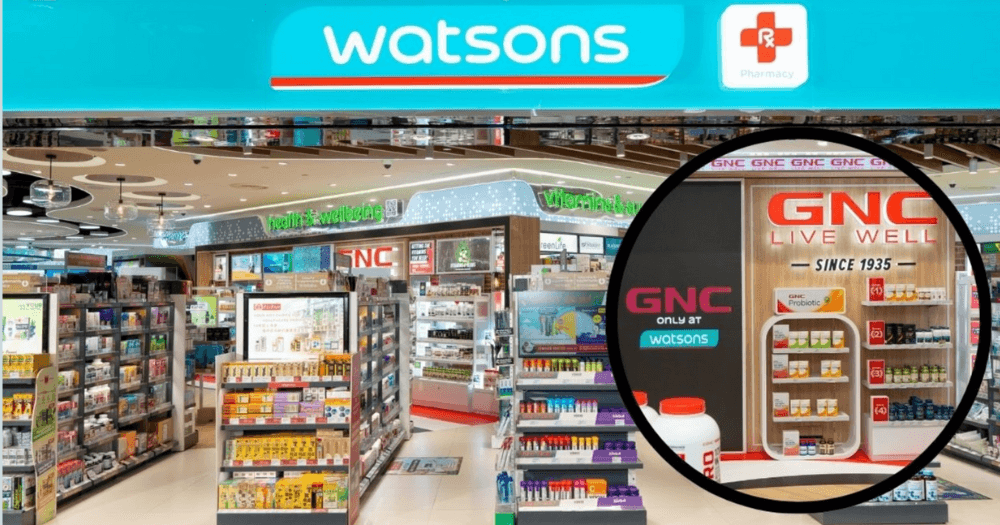
The safest channels are the boring ones. Established sports-nutrition retailers, pharmacies, and official brand stores (including a brand's own verified storefront on a marketplace) all sit inside authorised distribution, which is what gives you a real product and a path to recourse if something is wrong.
This is guidance, not a paid endorsement of any shop. The rule is simpler than a brand list: buy where the price is sane, the seller is the brand or an authorised retailer, and the verification code checks out. If all three line up, you are almost certainly holding the real thing.
A light note on medical conditions
The kidney scare is overstated for healthy people. Cumulative evidence from randomised controlled trials does not support the claim that creatine harms kidney function in healthy adults at standard doses, and the small rise in blood creatinine reflects creatine being converted to creatinine, not renal injury.
That said, this is informational coverage, not medical advice. If you have pre-existing kidney disease, are pregnant or trying to conceive, or take regular medication, check with a doctor or pharmacist before starting protein or creatine. "Over the counter" does not mean "risk-free for you."
FAQ
How do I compare protein tubs fairly?
Divide price by servings, then by grams of protein per serving. Cost per gram of protein is the number that reorders the shelf, not the sticker on the tub.
What creatine form should I buy?
Plain creatine monohydrate is the most evidence-backed and usually cheapest. Creapure or third-party-tested tubs are reasonable quality cues, but fancy variants rarely outperform monohydrate.
Which third-party seals matter in Singapore?
Look for Informed Sport, Informed Choice, NSF Certified for Sport or USP on the label. Generic 'lab tested' language is not the same thing.
Are Shopee and Lazada deals safe for supplements?
Be cautious. HSA has repeatedly flagged grey-market and counterfeit products on marketplaces. A price far below normal retail is a red flag. This is buying guidance, not medical advice.
How much protein per scoop do I actually need?
For most adults, around 20 to 25 g per serving is enough to stimulate muscle protein synthesis at one meal. More grams per scoop mostly means fewer servings per tub, not proportionally more muscle.
Sources
- Best protein powder guide, Singapore: SETHLUI / Ultimate Sup price guides (2026)
- Cheapest protein in Singapore 2026: Ultimate Sup Singapore
- Creatine monohydrate tub sizes and prices: Robinsons Singapore / MyProtein SG
- Regulatory overview of health supplements: Health Sciences Authority (HSA)
- HSA e-commerce enforcement figures (2024): NutraIngredients-Asia (Feb 2025)
- Informed Sport vs Informed Choice: LGC
- Creatine forms and Creapure purity: Momentous / SET FOR SET
- Leucine, protein dose and muscle protein synthesis in older adults: RCT (PMC)
- ISSN position stand: creatine safety and efficacy (Kreider et al., 2017)
- Creatine and kidney function: a narrative review (de Souza e Silva et al., 2023)
- Whey authentication and grey-market red flags: Proteinlab / SuppzLab (2026)
Spot an error or have a product we should test? We read every note.
Get in touch