Most recovery tools deliver one thing reliably: they make you feel better. Less soreness, a bit more range of motion, that pleasant loosened-up sensation afterwards. What almost none of them do well is speed up the actual physiological repair or improve how you perform the next day. And the most aggressive one of the lot, the ice bath, can actively work against the muscle you trained to build.
"Feels better" is not "recovers faster"
Here is the distinction that the whole category blurs. Feeling recovered and being recovered are different things. A tool can lower your perception of soreness while doing little to objective markers like next-day strength, jump height or sprint speed.
A lot of the benefit runs through your nervous system and your expectations, not through the mechanism printed on the box. Pain modulation, a relaxation response and plain placebo are doing heavy lifting. None of that is worthless, but it changes how you should value the gadget, and how much you should pay for it.
Foam rolling: real but modest, and not what you think
Foam rolling has the cleanest evidence in this group, which is partly why it sits near the top. A 2020 systematic review and meta-analysis found that rolling reliably increases range of motion, with a large effect, and is useful for recovery from exercise-induced muscle damage, while doing no measurable harm to performance.
The catch sits right next to that finding. Very few studies show those gains translate into better strength, jumping or sprinting, and the pain-relief picture is muddier than the marketing suggests: a 2025 controlled comparison found foam rolling normalised muscle stiffness faster than rest but was not better than simply resting for the soreness you actually feel. You get looser; you do not reliably get measurably faster, stronger, or even much less sore from the roller itself.
The mechanism is the myth-buster here. Foam rolling does not "break up" fascia, scar tissue or knots. The forces involved are too low to restructure connective tissue. What is actually happening is neurological: pain modulation, increased stretch tolerance and a parasympathetic shift toward relaxation. You are changing how your nervous system reads the tissue, not the tissue itself.
Massage guns: no clear edge over cheaper methods
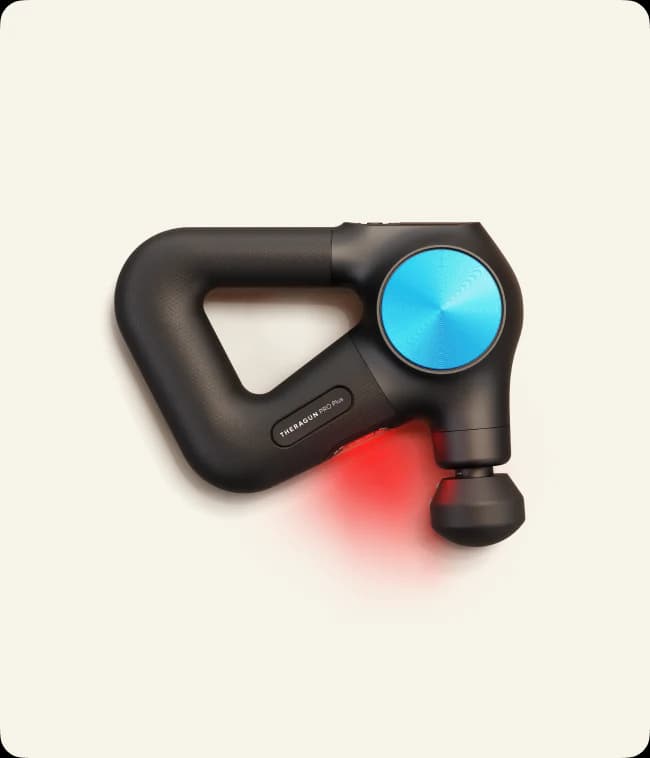
Percussive massage guns are foam rolling's louder, pricier cousin, and the evidence puts them on roughly the same shelf. The head-to-head work treats guns and rollers as broadly interchangeable perceptual-recovery aids, and a 2025 comparison of percussive massage, foam rolling and passive rest found neither active tool beat simply resting for relieving the soreness people reported, even though both shifted some tissue-stiffness measures. Individual trials disagree at the edges, which is exactly what you would expect from small studies of a perceptual outcome.
So the honest read is: a massage gun performs about the same as a cheap roller for sore muscles, and the gap over doing nothing is smaller than the price tag implies. If you like how it feels and it gets you to do something, fine. Just do not pay flagship prices expecting flagship recovery.
The safety caveats rarely make the ad copy. These devices drive real force centimetres into tissue, and misuse has been linked to bruising, nerve irritation and rare but serious cases of rhabdomyolysis. Harder and longer is not better. Keep the device off your spine, your neck and any injured area, and ease off the intensity and duration.
Ice baths: great for feeling fresh, a problem for building muscle
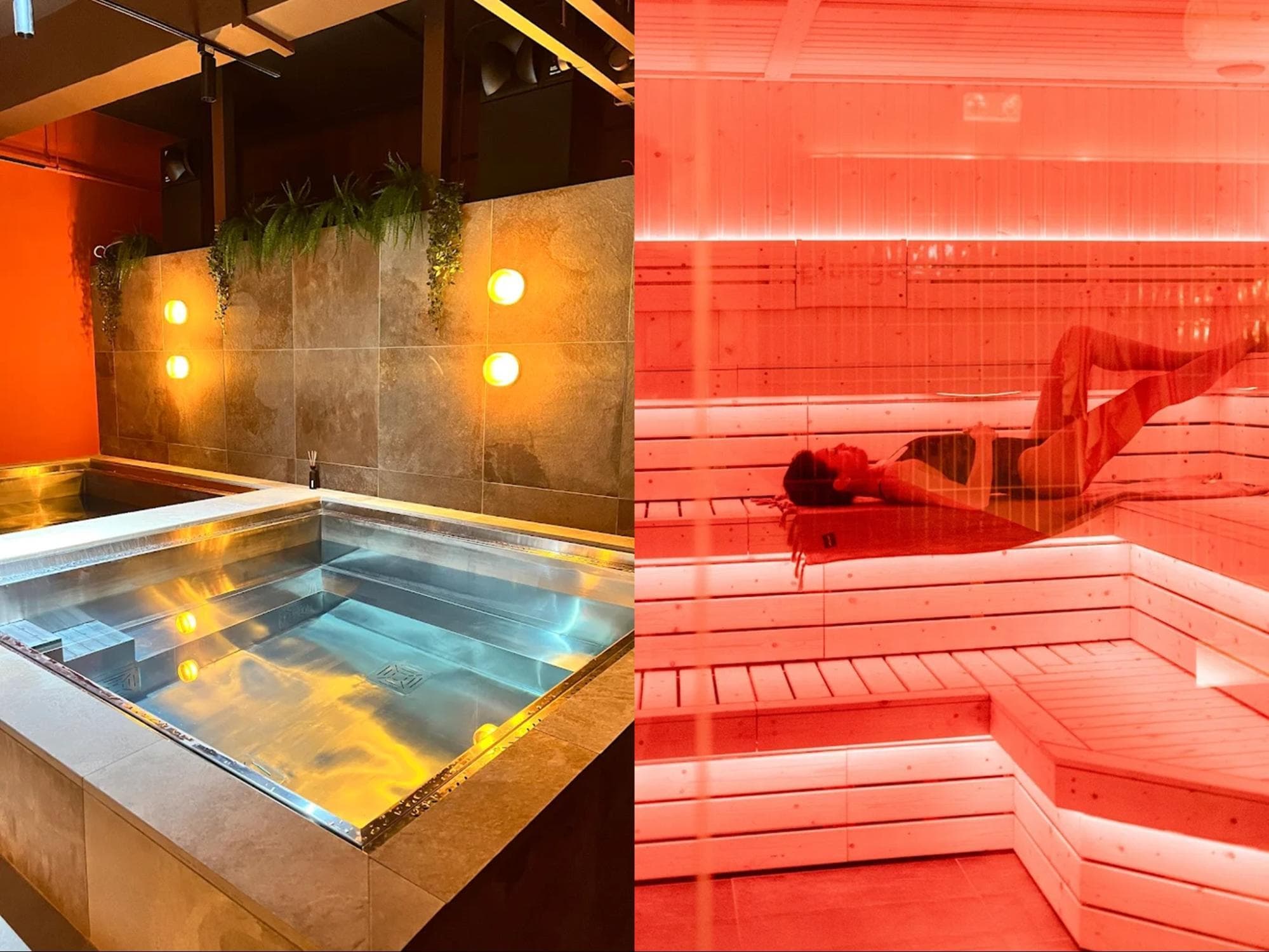
This is where the counterintuitive twist lives. Cold-water immersion genuinely makes you feel fresh and has a place in in-season recovery, when feeling ready to perform tomorrow matters more than long-term gains. But if your goal is building muscle, the timing matters enormously.
A 2024 systematic review and meta-analysis (8 randomised trials, around 116 participants) found resistance training alone produced a small-to-moderate hypertrophy effect (SMD 0.36), while cold-water immersion plus training produced only a negligible-to-small effect (SMD 0.14). The authors put the probability that cold immersion blunts muscle growth at 95.7%, applying when the ice bath happens within about 15 minutes of training.
The mechanism is established too. A landmark study found cold immersion suppressed anabolic signalling (mTORC1 and p70S6K) and reduced muscle-fibre hypertrophy after whole-body resistance training. The nuance worth holding onto: in that study, maximal strength gains were not significantly impaired. Cold blunts the size adaptation more than the strength one, so the two can diverge.
There was a 95.7% probability that post-exercise cold-water immersion attenuates resistance-training muscle growth.Piñero et al., 2024 meta-analysis
The practical rule is simple. If you just lifted to build muscle, skip the immediate ice bath, or push it several hours out. In a competition block where you train again tomorrow, the fresh-legs benefit can be worth the trade.
Compression boots and sauna: short-term relief vs the long game
NormaTec-style intermittent pneumatic compression has a narrow, real effect. It can reduce perceived soreness after hard exercise, but the appraised evidence is clear that it does not meaningfully improve neuromuscular function or speed up the repair of muscle damage. And the "flushing toxins" story is wrong twice over: lactate is not a toxin, and it is not what is causing your soreness in the first place. Boots are short-term soreness relief, not a repair machine.
The sauna is the one tool whose strongest evidence is genuinely impressive, just not for acute soreness. A 20-year Finnish cohort linked sauna use 4 to 7 times a week with roughly 50% lower cardiovascular mortality and about 63% lower sudden-cardiac-death risk versus once a week. It works as a passive heat-acclimation stimulus, raising plasma volume and improving thermoregulation and cardiovascular efficiency. Typical Finnish practice is 80 to 100°C in 1 to 3 bouts of 5 to 20 minutes. Treat the sauna as a long-term health and endurance-adaptation tool, not a muscle-recovery gadget.
The ranking, and the foundation nobody sells
By evidence versus marketing, the order looks like this. Foam rolling and massage guns are proven for range of motion and have a place as feel-good, perceived-recovery aids, but they are overhyped if you expect performance, faster repair, or even reliably less soreness than just resting, and they are about equal so buy on price. Compression boots are placebo-plus with a real but narrow soreness-relief effect. Ice baths are effective for feeling fresh but actively counterproductive for hypertrophy if timed wrong. The sauna is the standout, but for cardiovascular health and heat adaptation rather than next-day soreness.
Now the part nobody monetises. Chronic sleep restriction of 5 to 6 hours a night can cut muscle protein synthesis by nearly 20% and shift your hormones catabolically, raising cortisol and lowering testosterone and growth hormone. No gadget offsets that. On the nutrition side, roughly 40g of casein before bed is digested overnight and robustly raises overnight muscle protein synthesis, and chronic use supports gains in muscle mass and strength during resistance training.
If you can only fix one thing, fix sleep, then protein. They do the recovery your gadgets merely advertise. The tools are the garnish. Sleep and food are the meal.
This is informational coverage, not medical advice. If you have a health condition, an injury, or you are pregnant, talk to a doctor before using cold immersion, sauna or percussive devices.
FAQ
Do massage guns speed recovery?
They perform roughly like foam rollers for perceived soreness: useful for how you feel, but with little clear edge over cheaper methods for next-day performance.
Should I ice bath right after lifting?
If muscle growth is the goal, skip immediate cold immersion or push it several hours out. Post-exercise cold may blunt hypertrophy signalling when timed within about 15 minutes of training.
Does foam rolling break up knots?
No. The forces are too low to restructure tissue. Foam rolling mainly modulates pain perception and increases range of motion through neurological effects.
What recovery tool has the strongest long-term evidence?
Regular sauna use links to impressive cardiovascular outcomes in cohort data, but it is a long-term health tool, not an acute soreness fix.
What actually drives recovery?
Sleep, total protein intake and progressive training do the heavy lifting. Gadgets mostly change how sore you feel, not how fast tissue repairs.
Sources
- Skinner, Moss & Hammond: A systematic review and meta-analysis of the effects of foam rolling on range of motion, recovery and markers of athletic performance (2020)
- Local and non-local effects of foam rolling on soft tissue and spinal excitability: Frontiers in Physiology (2021)
- Percussion massage therapy and delayed-onset muscle soreness, randomized controlled trial: Frontiers in Public Health (2025)
- Foam rolling or percussive massage for muscle recovery: insights into DOMS (2025)
- Massage-gun safety and buying guidance: Consumer Reports
- Piñero et al.: "Throwing cold water on muscle growth," systematic review and meta-analysis (2024)
- Fyfe et al.: Cold water immersion attenuates anabolic signalling and fibre hypertrophy, not strength, Journal of Applied Physiology (2019)
- Intermittent pneumatic compression and exercise-induced muscle damage, critically appraised topic: Journal of Sport Rehabilitation (2021)
- Laukkanen et al.: Cardiovascular and other health benefits of sauna bathing, Mayo Clinic Proceedings (2018)
- Sleep and athletic performance: a multidimensional review (2025)
- Snijders & van Loon: Protein ingestion prior to sleep, Gatorade Sports Science Institute (2014)
Spot an error or have a product we should test? We read every note.
Get in touch